
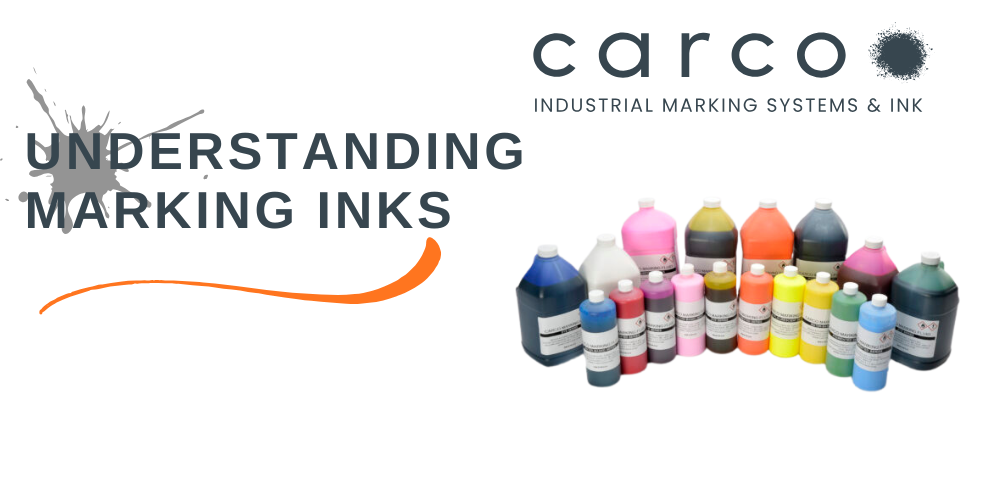
Marking inks are used on metal, rubber, and non-porous plastics, and are necessary for everything from reject marking to color coding and traceability marking to identifying high and low points on tires.
There are three primary types of ink commonly used in part marking applications: 1) solvent based-inks, 2) water-based inks, and 3) UV invisible inks, and within these classifications are pigmented inks and dye-type inks. The question of which type is best all boils down to application!
Pigmented (Solvent-Based)
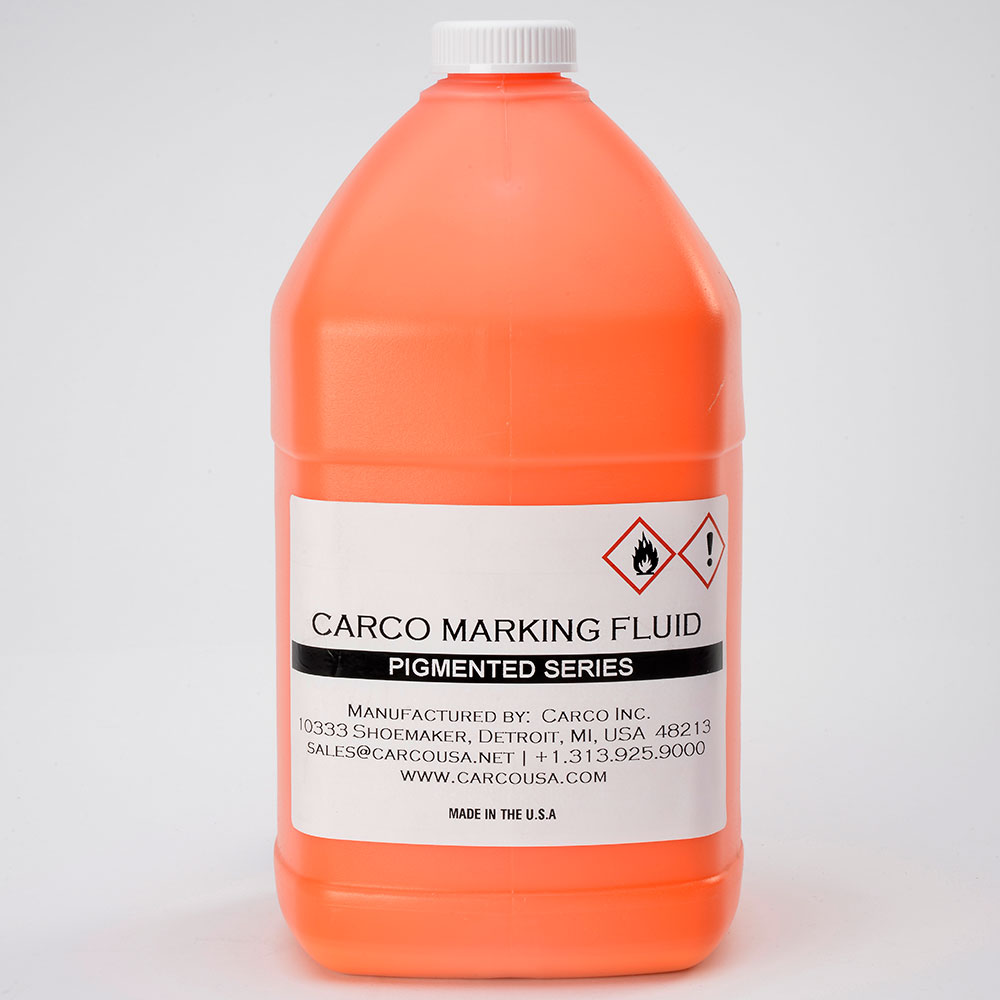
Pigmented marking inks combine finely ground, fully insoluble color particles suspended in an alcohol-based solvent. Stamps made with pigmented inks are thick, highly visible, and adhere to a wide range of surfaces.
Key Characteristics
- Provides a heavy-bodied finish
- Available in a rainbow of color options
- Shows up well on both light- and dark-colored surfaces
- Resistant to chemicals
- Rapid-drying formulas are available
Benefits
- Greater chemical and washing resistance than other types of marking ink, especially dye-types
- Offers precise and robust color options, depending on the formula and substrate color
- Works well with a variety of marking equipment
Limitations
Pigmented ink doesn’t work for every application. Some common limitations include:
- Longer dry times for some specialty formulas and a risk of smudging if the materials are being handled during marking
- Prone to flaking off of material if adhesion is weak
- The thick layer can interfere with certain processing steps
- Low flash points pose flammability risks in some formulations
Best Use Cases
- Visible identification of defects on fast-moving parts and unusual shapes, such as tubing and webs
- Marking highly visible high and low points on tires to assist during installation and alignment
- Permanent marking of surfaces that will be exposed to oil or coolant
- Barcoding and identity marking on parts that need treatment in an alkaline, acid, or phosphate bath
Dye (Water- or Solvent-Based)
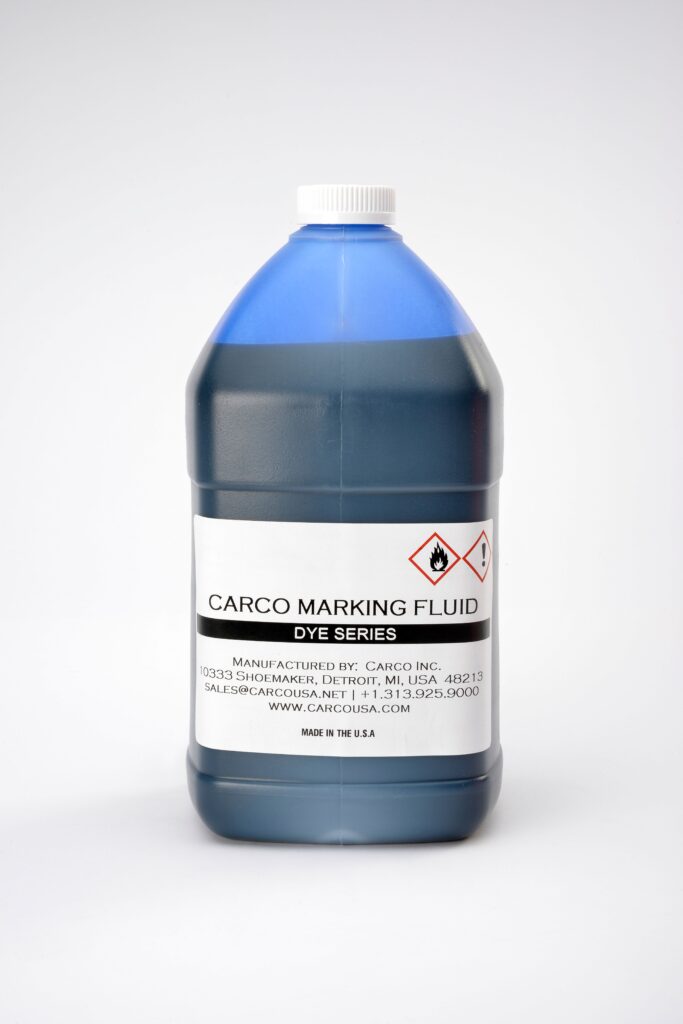
Dye inks leave translucent marks that allow the substrate to remain visible beneath them. When you need to coat or mark a surface but can’t risk thickening it or altering its texture with built-up pigments, dye-based inks are a good choice. The dye molecules are fully dissolved within the liquid base, meaning the ink won’t settle or change texture when stored for long periods.
Key Characteristics
- Highly visible on light-colored or metallic surfaces
- Non-plugging to reduce maintenance of marking equipment
- Multiple color options for visibility and complex designs
Benefits
- Won’t settle and plug up equipment in between uses
- Rapid drying, with some formulas requiring as little as 10 seconds to set
- Some formulas can penetrate through protective layers of oil, while others adhere to difficult non-porous surfaces
Limitations
- Won’t work over dark-colored substrates like sheet or tire rubber
Best Use Cases
- Reject marking, especially since the ink is hard to remove from most materials
- Fluorescent-enhanced and luminescent formulas for leak detection
- Automated cut point tracking in metal fabrication, highlighting areas that need extra defect testing
- High-speed spring and wire marking
Water-Based
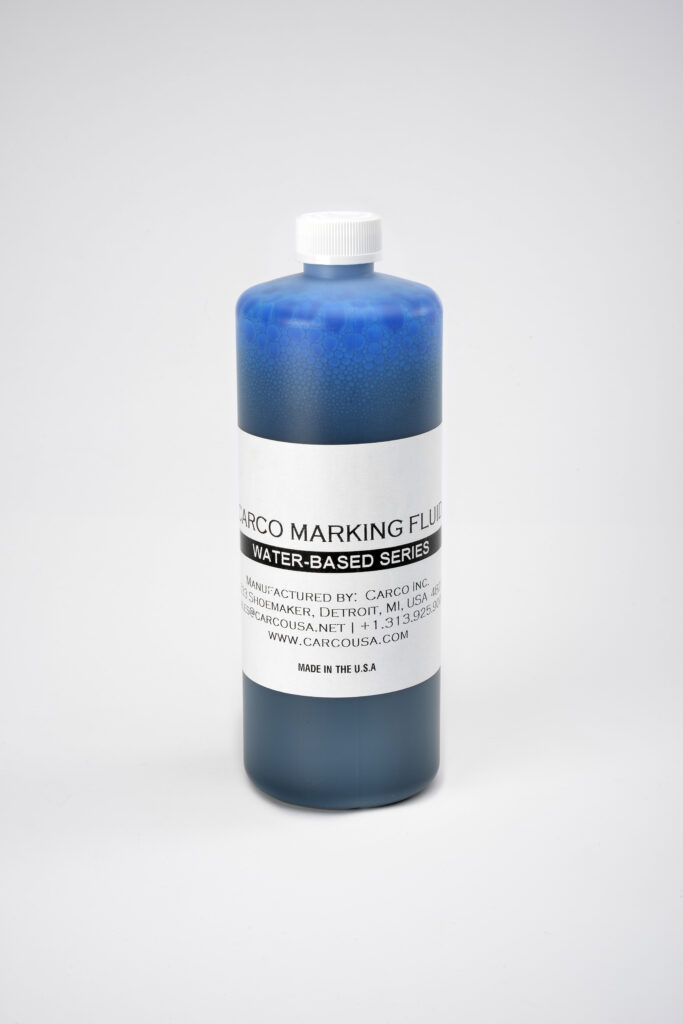
In some applications, washability is critical, and that’s where water-based inks come in. This type of marking ink is non-toxic, safe for general use, and can be easily washed off without leaving behind residue.
Key Characteristics
- Quick-drying without the need for solvents or UV activation
- Good adhesion to a wide range of porous surfaces
- Available in many color options
- Some formulations don’t dry, improving washability
Benefits
- Non-flammable, non-toxic, and easy to dispose of without specialty handling equipment
- Low maintenance and easy to clean off of equipment and materials
- Available in non-drying, film drying, and UV-activated formulas
Limitations
- Not as durable or permanent as other marking inks
- Won’t adhere to some non-porous surfaces as well as other inks
- Drying time varies more than other formulas
Best Use Cases
- Marking automotive body panels that require cleaning before final painting
- Temporary reject marking where drying is not desired
- Marking pads and markers that need to remain open for hours at a time without drying out
UV
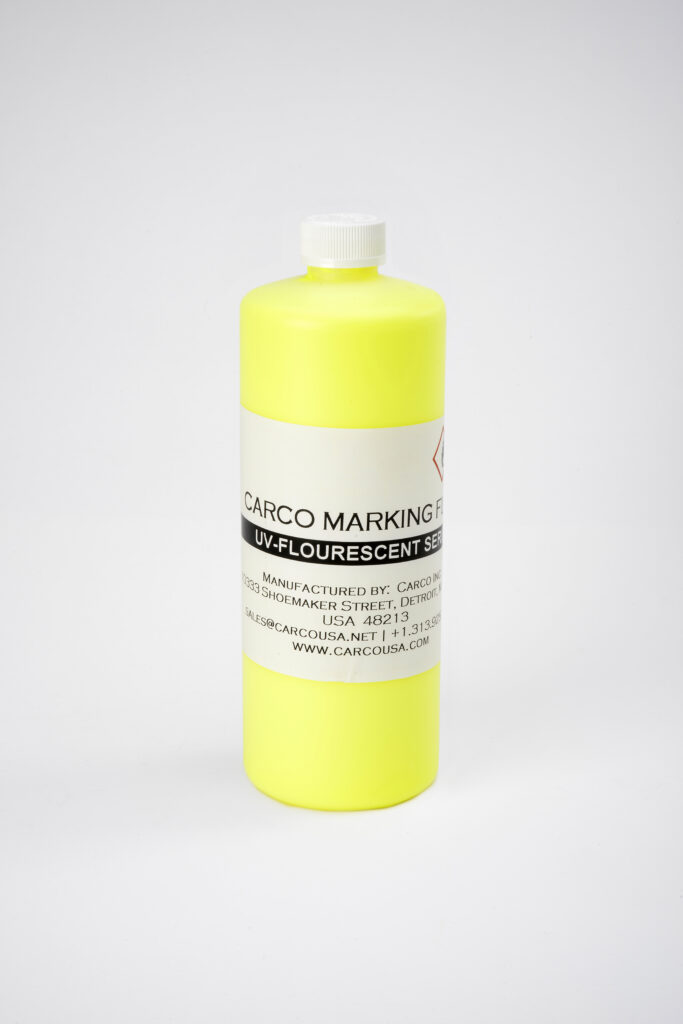
Available in both solvent-based and water-based formulas, these inks dry rapidly and remain invisible at first, becoming visible only when exposed to UV light. When exposed, the ink becomes visible, revealing defects or hidden inventory tracking information, making it valuable for both quality control and shrinkage prevention.
Key Characteristics
- Discreet and invisible on all substrates until exposed to UV light in the 365nm range
- Red or blue fluorescence available
- Available as fast- or slow-drying formulas
- Works well with spray, contact, and jetshot applicators
Benefits
- Doesn’t leave visible marks on consumer-ready products
- Provides clear marks for cut points without leaving any visible ink on the processed materials
- Allows for marking of defects without the need to remove the ink after the material is reworked
Limitations
- Limited color options since it’s only visible during fluorescence
- Requires specialty application and UV equipment
Best Use Cases
- Leak testing
- Defect marking
- Count break marking on packaging
- Cut point marking on metal
Get Help Selecting Your Solution
Carco is a U.S.-based manufacturer specializing in industrial marking inks and part-marking systems. All part marking systems and inks are custom-engineered based on your application requirements, including viscosity, drying time, washability, chemical resistance, and more.